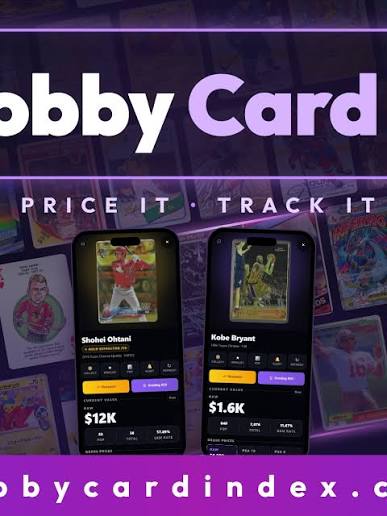
Most card price tools answer one question: what did this sell for? Hobby Card Index (HCI) answers that one too, then keeps going. Scan a card, track the portfolio, check whether grading it is worth the postage, and, if you sell at shows, push it to an eBay listing without retyping a thing. It is a lot of hobby for one login.
What it does
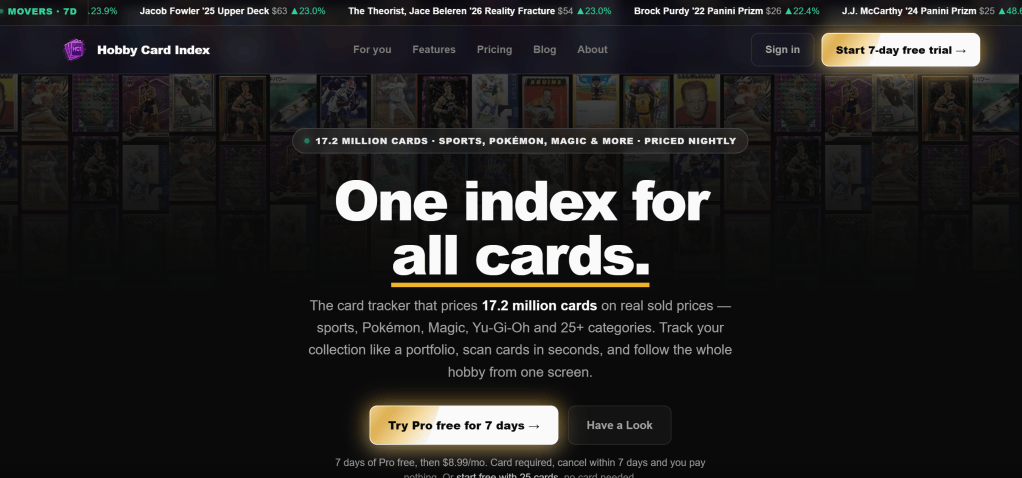
HCI is a web-based price tracker and collection manager that values cards from completed sales, not asking prices. Per the company’s site (as of Oct 26, 2026), it prices cards across sports and more than 25 other categories, including Pokémon, Magic: The Gathering, and Yu-Gi-Oh, and it says prices refresh nightly. The same site claims more than 16.4 million cards are priced, which is a vendor figure we could not verify independently.
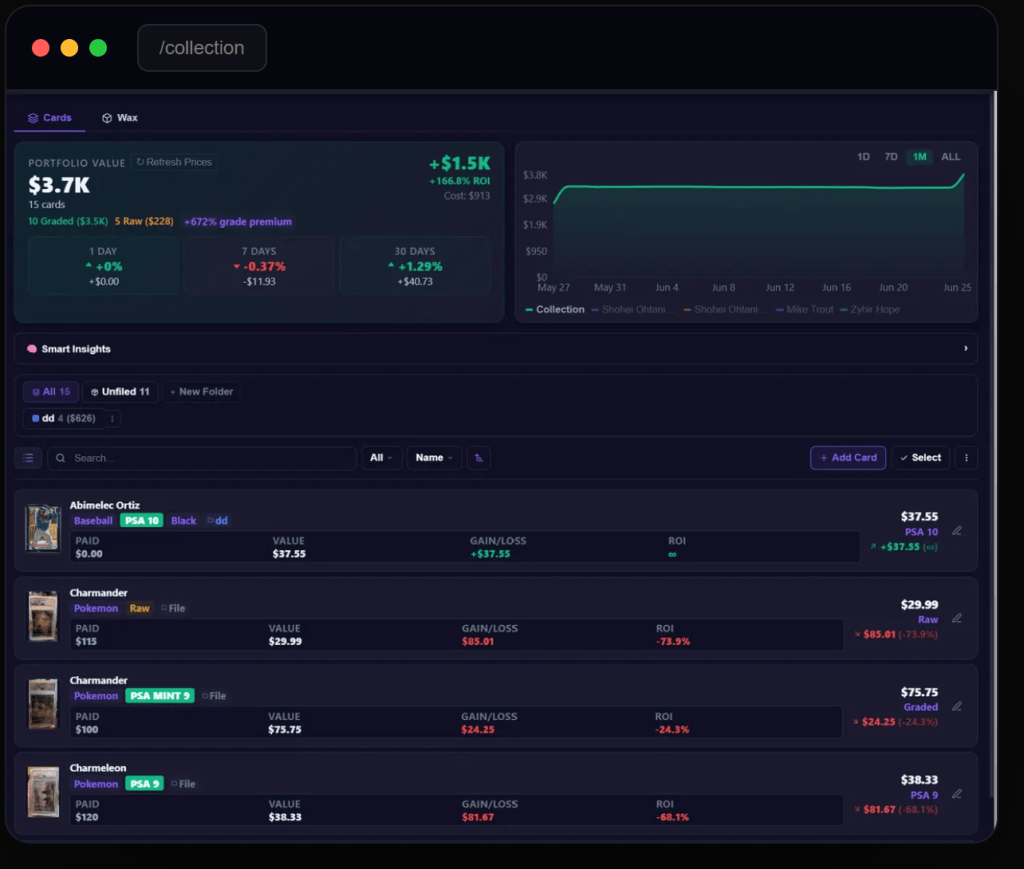
The basics will feel familiar. You can scan a card with your phone camera, add it to your collection, and watch portfolio value and profit and loss move. Card pages show grade-level prices, population data, and sold history with charts.
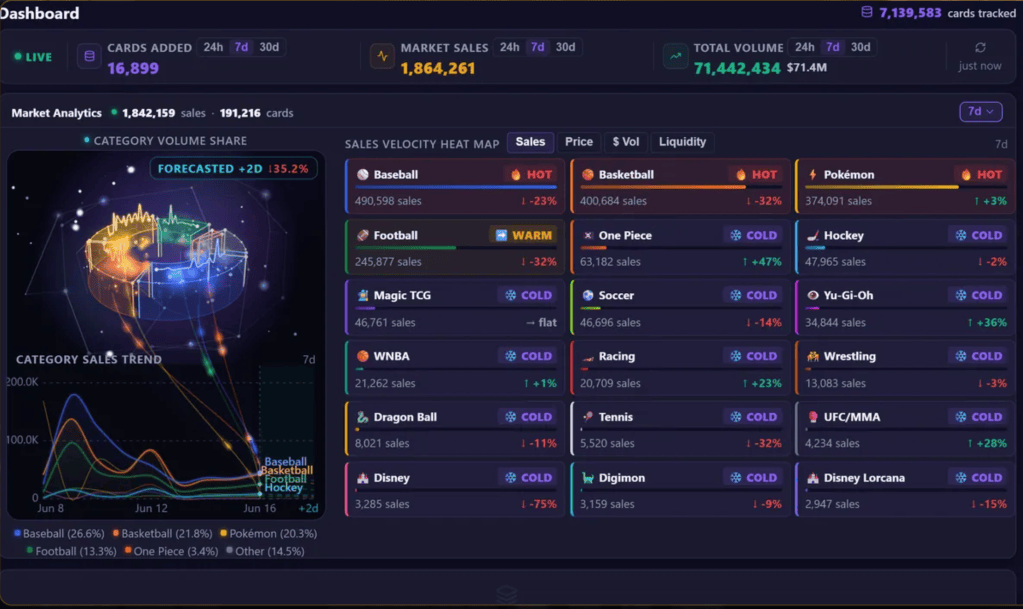
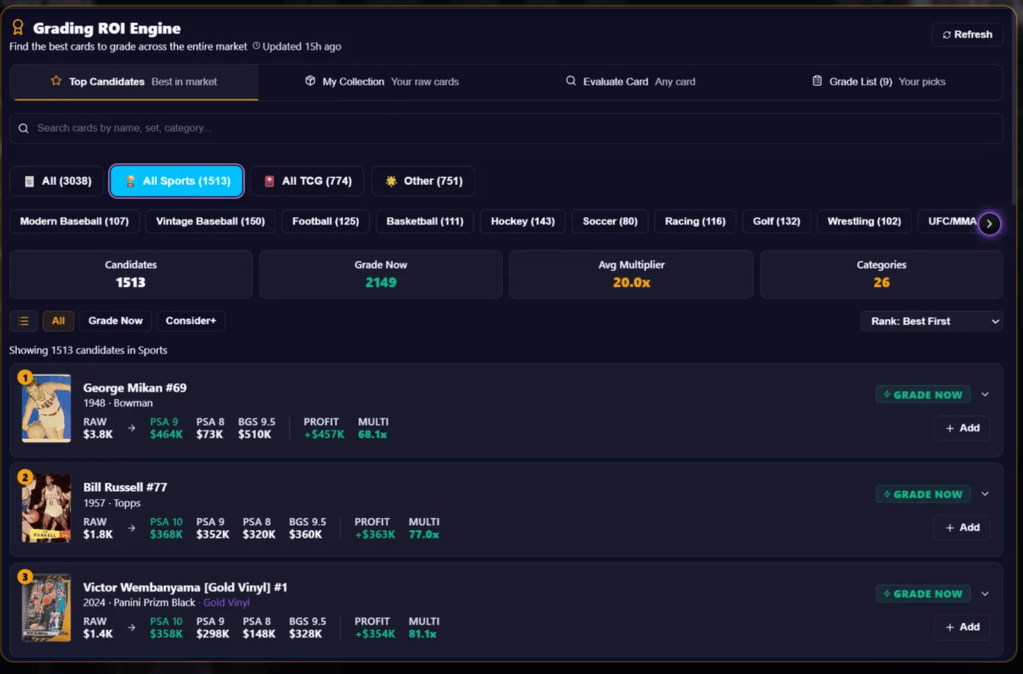
Then come the extras. A grading ROI engine compares raw prices against PSA, BGS, SGC, and CGC prices, subtracts grading costs, and ranks cards into grade, hold, or sell calls. A “Collector’s Workbench” bundles a trade analyzer, set builder, deal finder, sell-timing tool, and population report analysis. There are also market indexes, including an HCI 500 and category-level versions, with movers and heat maps.
Sellers get a Dealer Mode: scan-to-eBay listing, inventory, expenses, consignment tracking, a customer list, and P&L. CSV import and export are available on every plan, per the site.
What works
Sold prices first. HCI says it leans on completed sales and shows eBay sold history right on the card page. A Techcouver profile (July 13, 2026) says the platform also draws on completed sales from Fanatics Collect, Goldin, and Heritage. Sold data is the right foundation for a tool like this.
The grading ROI idea is the hook. Plenty of tools estimate a grade from a photo. HCI starts from the money question: given the spread between raw and graded prices, after fees, is this card worth sending in at all? For anyone sitting on a stack of raw cards, that framing is useful.
One home for collectors and sellers. Most apps pick a side. HCI covers both the person tracking a collection and the dealer working a table, so a collector who starts flipping does not have to switch tools.
A real free tier. You can start without a credit card, and there is a free plan, a Pro tier with unlimited tracked cards and alerts, and higher tiers for dealers and enterprise users. Choosing yearly billing saves roughly 15%, per the site.
Good to know
The free plan is a taste, not a home. As of Oct 26, 2026, it caps you at 25 tracked cards and 50 scans a month, so a serious collection will push you to a paid plan fast.
Next, a lot of the headline numbers are the company’s own. Catalog size has been reported as 7 million cards (Techcouver, July 13, 2026), 10.9 million plus (Product Hunt listing, undated), and 16.4 million plus (HCI site, Oct 26, 2026). Those could reflect real growth, but it is worth asking how the catalog is counted.
The market indexes and grading ROI rankings are the most interesting features and the least explained. The site points to a “How we price cards” page, and we would read it before betting a grading submission on a ROI call. Grading ROI also covers only PSA, BGS, SGC, and CGC, and the Techcouver piece does not say how well less-traded cards are covered. Thin comps are a problem for every sold-price tool, and HCI is unlikely to be immune.
Finally, we have not run a hands-on test. This spotlight is based on public pages, so treat it as a map, not a verdict.
Who it’s for
Raw card holders weighing a grading run. If you have a pile of raw cards and want a ranked shortlist with the fees already netted out, the ROI engine is built for you.
Collectors who think like investors. Portfolio value, alerts, watchlists, and market indexes suit people who check their collection like a brokerage account.
Show dealers and part-time flippers. Batch scanning, auto-built eBay listings, and expense tracking aim squarely at people who buy and sell at tables.
Who is it not for? Collectors with a small, sentimental stash who just want a simple checklist may find it more tool than they need. Anyone who wants fully documented valuation methods before trusting a number should read the methodology page first.
Bottom line
Hobby Card Index is an ambitious, all-in-one bet that collectors want the grading math, the portfolio view and the dealer toolkit in one place. The free tier makes it easy to try, and the grading ROI engine is the feature to test first. Just remember that the big claims come from the company, and verify the price on a card you know well before you trust it with a purchase.
Visit Hobby Card Index today: https://hobbycardindex.com/







Leave a Reply