
A sold-comps site with a population report attached, now with a phone app. It is built for people who care what a card actually sold for.
Some card tools promise to predict the future. Vintage Card Prices (VCP) is more interested in the past, and that is exactly why it is worth your attention.
The pitch is simple: look up a card, see what it really sold for, where it sold, and when. No asking prices. No vibes. Just receipts. Then layer on population data so you know how many copies are out there, and you have the two questions every vintage buyer asks before pulling the trigger.

What it actually does
VCP is a price-tracking site for collectors, buyers, and sellers, with search across baseball, basketball, football, hockey, other sports, and non-sport cards. Here is the core toolkit:
- Sales history. Each card page shows past sales with date, venue, and result. The site says its values are based on sales transactions of graded cards from eBay and major auction houses.
- Historical auction images. You can look at photos from past auctions, which is a big deal when you are trying to tell a sharp copy from a tired one at the same grade.
- Universal Population Report. Instead of hopping between grader sites, VCP pulls grading data from multiple companies into one view. Its news page also describes population totals and trends over time, plus a sales-by-grader comparison across PSA, SGC, CSG/CGC, and Beckett.
- My Collection. Track what you own, what it cost, and how estimated value has moved.
- Want List. Tell it what you are hunting and get notified when a match shows up to bid on or buy. The site describes the want list as free.
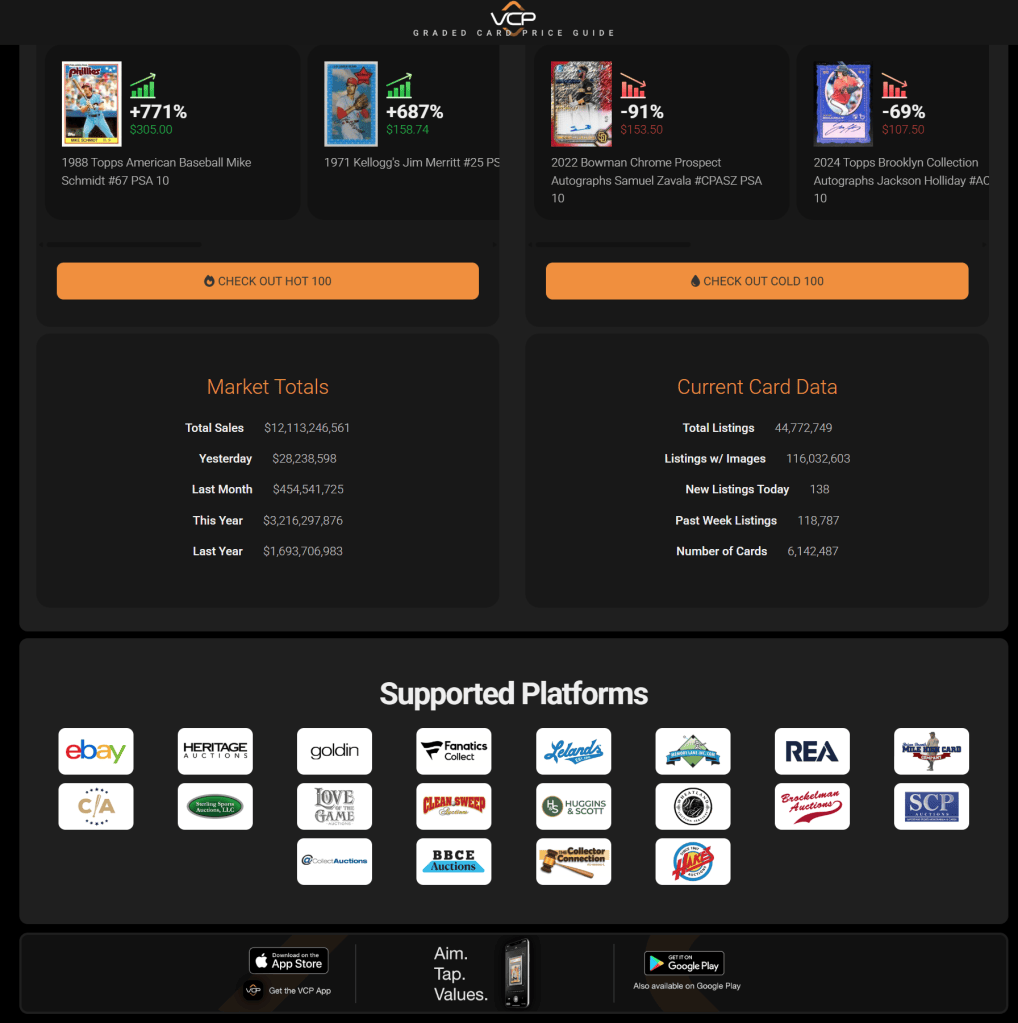
- Mobile. The website has a mobile-friendly layout, and there is a separate iPhone app that adds card scanning and the same research tools on the go.
The app’s own listing says it covers sports, non-sports, and several trading card games, though the main site leans heavily on graded sports cards. More on that below.
The numbers behind it
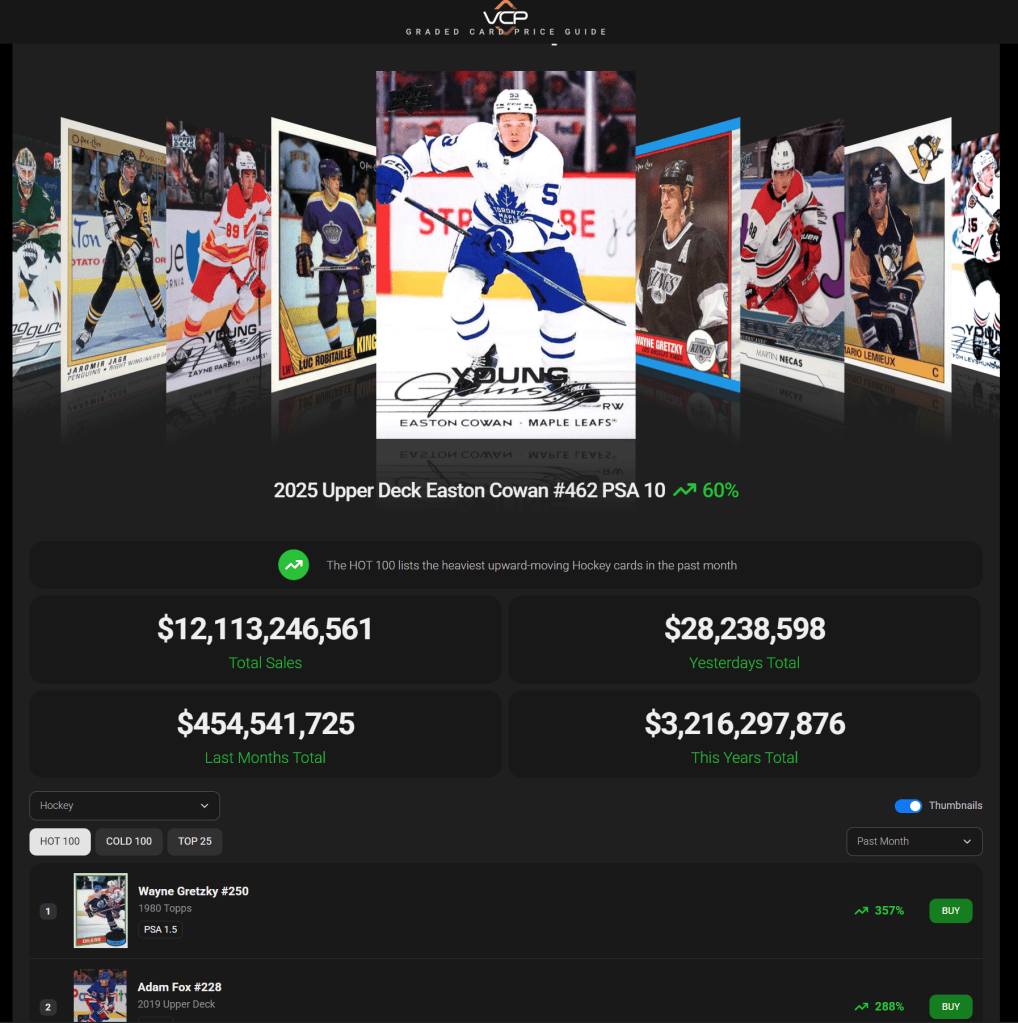
As displayed on the VCP homepage on Oct. 20, 2026 (the site does not publish an as-of date), the database lists about 3.67 million cards tracked and more than 29 million total auctions on record. Those are the site’s own figures, not independently audited, so treat them as marketing-grade scale rather than a guarantee of coverage for your specific card.
On the app side, the aggregator MWM lists the iPhone app at a 4.4 out of 5 rating from 116 ratings and 10,000+ downloads, as of Oct. 20, 2026 (source: MWM’s page summarizing the App Store listing). The app first shipped on May 13, 2022. That is a small review count, so it is a signal, not a verdict.
What we like
It is honest about what a price is. VCP leans on sold data, not listings. That sounds basic. It is not. A lot of the hobby still treats a hopeful asking price as a market.
The images change how you shop. Seeing the actual cards behind a sale lets you judge whether a result is a clean comp or a fluke. For vintage, where eye appeal can swing a result at the same grade, this is the feature we would use first.
Population plus sales in one place. Scarcity without sales is trivia, and sales without scarcity is half a story. Putting them on the same card page saves a lot of tab juggling.
It meets you on your phone. Whether you use the mobile site at a card show or the app at the kitchen table, the research workflow stays the same.
Good to know
Two honest caveats. First, VCP is built around graded cards. If you mostly buy and sell raw cards, you will often be looking for comps through the graded lens, and this is not a raw-card pricing engine. Second, the scope story is a little muddy: the homepage language centers on graded sports cards, while search and the app listing mention non-sports and TCG. If you collect outside graded sports, check that your category is covered before you commit to a paid tier.
Also worth knowing: the free account is generous enough to try, but the full experience sits behind a paid tier called VCP Gold (with a one-week free trial listed in the app). We have not tested which features land on which side of the line, so read the plan details before you subscribe.
Finally, a sold price describes what happened, not what will happen. It is a great tool for context and a poor crystal ball.
Who it’s for
Vintage and high-grade collectors who want to sanity-check a purchase against real sales, with photos, before they pay up.
Sellers deciding where to price a graded card and whether a recent sale is a real comp.
Investors who like data and want sales history, population, and a collection tracker in one login.
It is probably not the first stop for raw-card flippers or anyone who wants a deal-alert engine with grade-matching on live listings. Other tools in this space are better built for that.
Bottom line
VCP is not flashy, and that is the charm. It answers a plain question, “what did this actually sell for,” and backs it up with images and population context. If you buy graded vintage, it is a strong addition to your toolkit, and the free tier makes it easy to kick the tires. Just confirm your category is covered before upgrading.
Visit VintageCardPrices.com to try it.






Leave a Reply