
The pitch is simple and a little bit brilliant: stop building another marketplace, rebuild the show floor itself.
Every collector knows the feeling. You’re three aisles deep at a Saturday show, a dealer slides a binder across the table, and you flip pages until something stops you cold. That moment is the whole reason people still drive to VFW halls and hotel ballrooms in an era when every card on earth is a search bar away.
CardGym is betting that moment can live online. Its tagline says it plainly: the card show that never closes. The interesting part isn’t the slogan, though. It’s the design choice underneath it. CardGym isn’t pitching a better listings grid. It’s pitching booths.

What it does
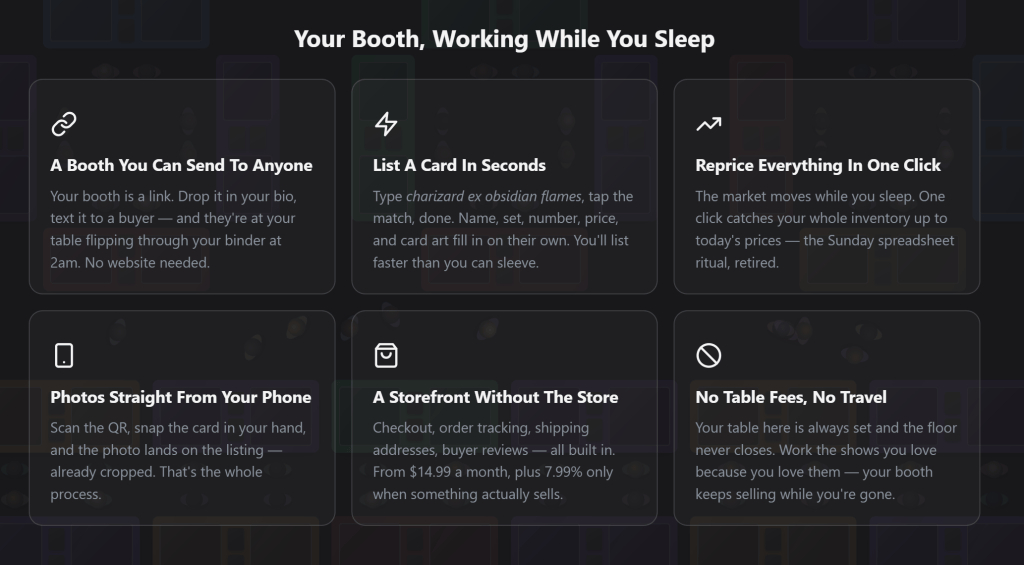
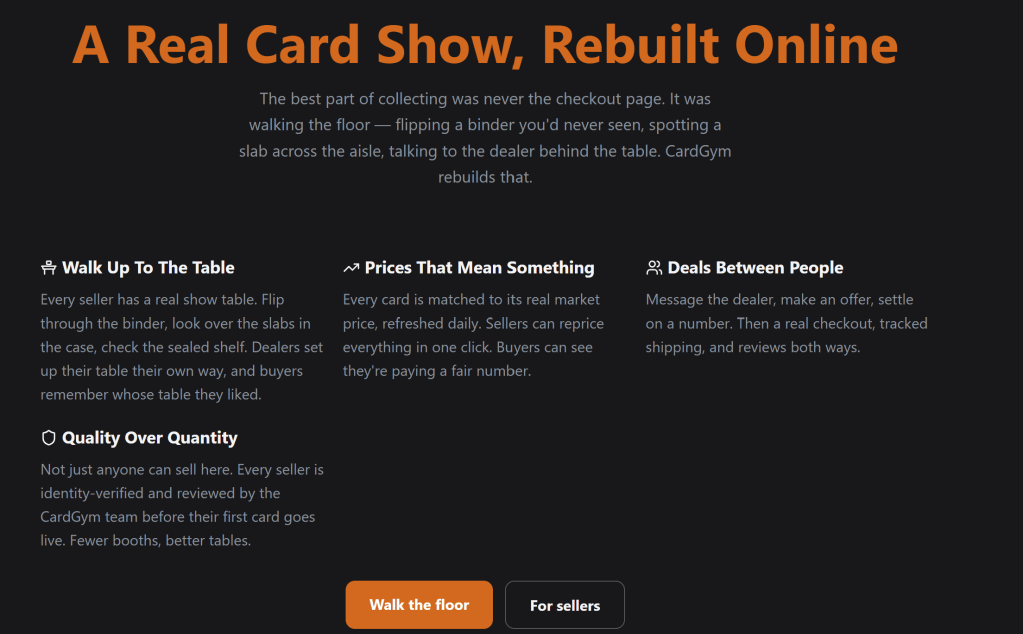
CardGym organizes inventory the way a show floor does. Dealers get booths. Inside a booth, you flip through binders and check the display case, the same mental model you use walking a real show, just without the parking.
Buyers can shop raw cards and graded slabs from sellers the site describes as vetted. Vendors are pitched on speed: the homepage invites dealers to set up a booth the same night.
What genuinely works
The metaphor is the product, and it’s the right metaphor. Most hobby marketplaces flatten dealers into interchangeable rows of listings. A booth restores something that matters: who you’re buying from. At a show, you learn which dealer prices fair, which one knows vintage, which one always has the weird parallels. A booth-based layout gives that reputation somewhere to live.
Browsing is a feature, not a bug. Search is great when you know exactly what you want. It’s terrible for discovery. Flipping a binder is how collectors stumble into cards they didn’t know they needed, and very few online tools even try to recreate that.
It’s aimed at dealers who already exist. The vendor pitch isn’t “become a seller.” It’s “bring your table online.” That’s a smart wedge. Show dealers already have curated inventory, a pricing instinct, and repeat customers. Giving them a storefront that looks like how they already sell lowers the adoption hurdle.
Where we’d push back
“Vetted” needs a definition. Seller vetting is the single most important trust claim on a peer-to-peer card marketplace, and as of September 23, 2026 the public-facing site doesn’t explain what it means. Identity checks? Sales history? References? Buyers spending real money on slabs deserve that spelled out on the homepage, not buried.
The site is nearly invisible to search engines. Load CardGym without JavaScript and there’s almost nothing there beyond the title and description. For a marketplace that lives or dies on dealers and buyers finding it, that’s a real discoverability problem, and an easy one to fix with server-rendered landing pages.
The name has a neighbor. There’s an unrelated Pokémon shop operating as The Card Gym. Collectors googling the brand will hit both, and that’s a confusion CardGym should get ahead of.
Online shows need crowds. The magic of a physical show is density: hundreds of tables, all in one room, all at once. A virtual floor with a handful of booths feels less like a show and more like an empty mall. CardGym’s challenge isn’t the concept. It’s filling the floor.
Who this is for
Show dealers who want a seven-day storefront. If you already work weekend shows, CardGym’s pitch is essentially “your table, open all week.” That’s the audience it’s clearly built for.
Collectors who shop dealers, not listings. If you have a handful of sellers you trust and like to browse their stuff, the booth model fits how you already buy.
For the high-grade vintage buyer, it’s a watch-and-see. Vintage buying is relationship-driven, which makes the booth concept a natural fit in theory. In practice, the value depends entirely on which dealers set up shop and how clearly CardGym defines vetting. Until both are clearer, this is one to bookmark rather than build a buying routine around.
Bottom line
CardGym gets the most important thing right: collecting is social, and the show floor is where that shows up. Rebuilding the booth and the binder online is a sharper idea than yet another marketplace grid, and it deserves attention.
Define vetting, put a face on the operation, and make the site readable to search engines, and CardGym has a real shot at owning the space between eBay and the Saturday show.
Verdict: promising concept, worth a browse, especially if you’re a show dealer. Kick the tires before you buy anything big, and look for the vetting details first.
Visit CardGym today: https://cardgym.online/






Leave a comment