
Everyone has a comp tool for the card that came out of the box. Waxstat is betting you need one for the box itself.
Here’s a weird blind spot in the hobby’s tech stack. You can comp a single raw rookie in about four seconds. You can pull pop reports, grade-adjusted sales, and price charts going back years. But ask what a sealed hobby case of last month’s hot release should cost right now, across every shop that sells it, and most collectors are still tab-hopping between retailer sites like it’s 2014.
Waxstat is built for exactly that moment. It tracks prices for sealed product (hobby boxes, cases, blasters, mega boxes) across a long list of retailers, puts them side by side, and pings you when they move. It also runs a release calendar and checklists, and it has a separate set of tools for card shops that sell wax on Shopify.
It’s not flashy. It is useful. And it covers a part of the market that almost nothing else on our radar touches.
What it does
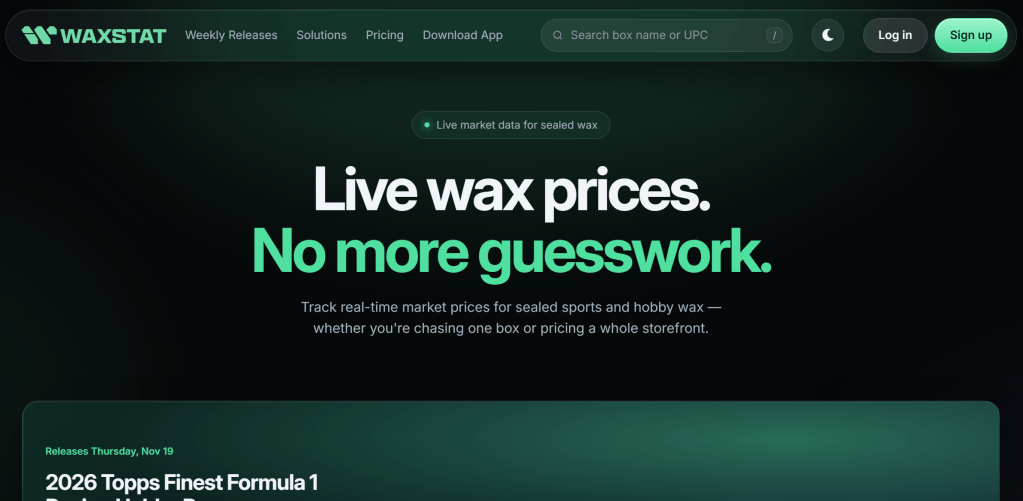
For collectors, the core loop is simple. Search a product by name or scan its UPC, and Waxstat shows you what retailers are asking for it, plus a price history and a short-term trend. The site says it monitors more than 32,900 boxes and cases and roughly 198,000 pricing data points (Waxstat homepage, accessed Nov. 13, 2026), and that prices “refresh every few hours.”
From there you can build a watchlist and get email or push alerts when a box you care about changes price. A “Moving today” view shows the biggest 24-hour swings, and the release calendar tells you what’s dropping this week, with checklists attached. It covers sports, Pokémon, and other TCG product, so it isn’t strictly a sports card play.
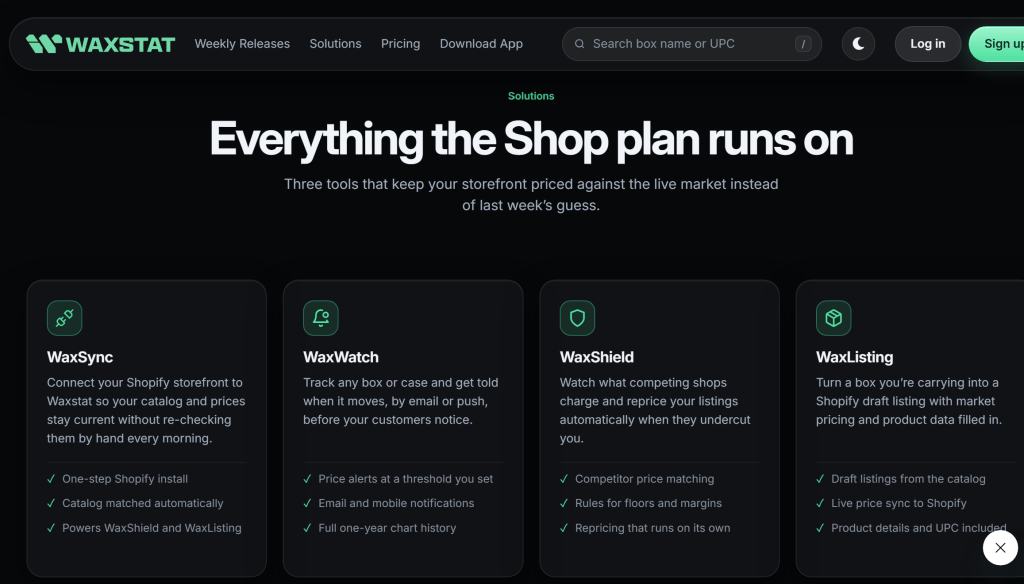
Shops get a different toolkit. Waxstat runs as an app inside a Shopify store, reading the shop’s catalog and writing prices and listings back. WaxShield alerts a shop when competitor prices move and lets it update its own price with one click. WaxListing drafts new product listings. Participating shops also get listed in Waxstat’s price comparisons, which puts their inventory in front of shoppers.
It lives on the web, iOS (including Mac and Vision Pro builds), and Android.
What genuinely works
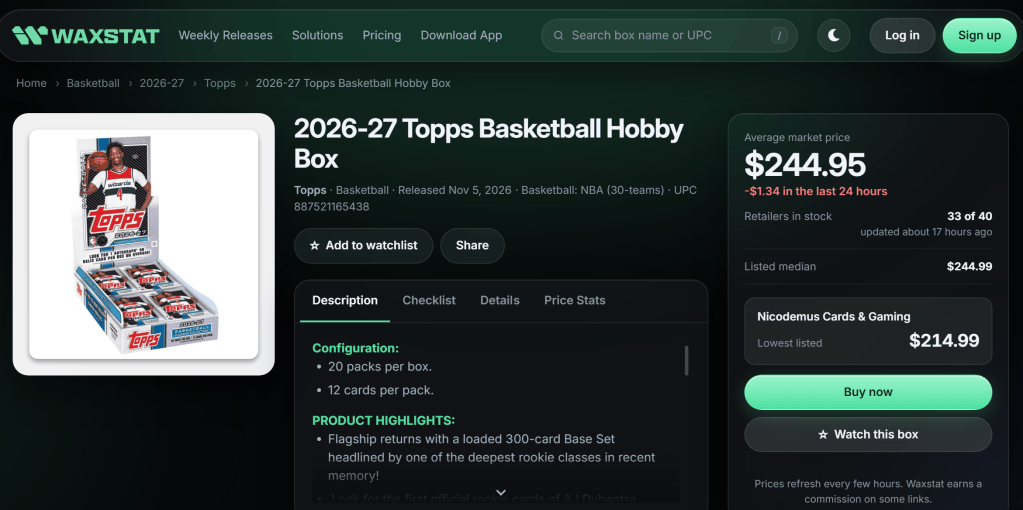
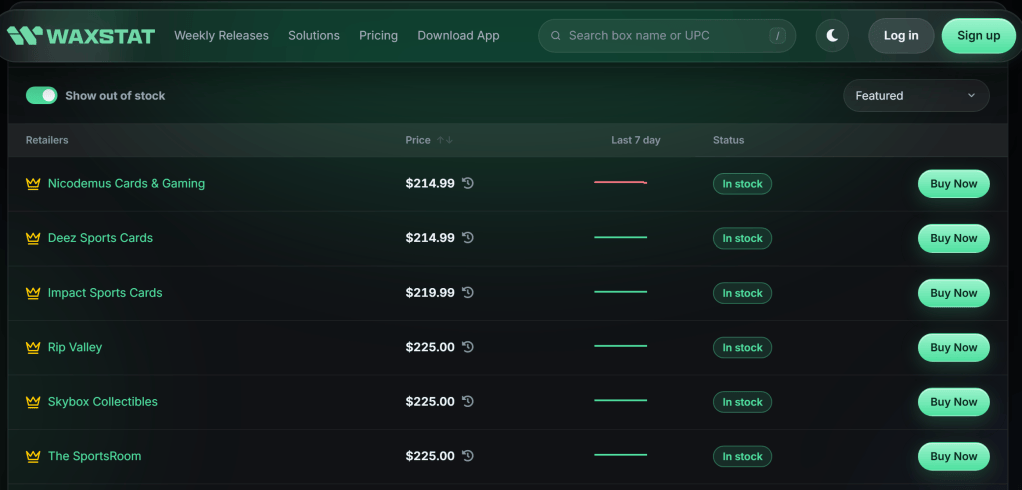
It solves a real, unglamorous problem. Sealed wax prices swing hard around release weeks, and the spread between shops can be meaningful. Having one screen that lines them up saves time and, occasionally, real money. That’s the whole pitch, and it delivers on it.
UPC scanning is the right call. Standing in a card shop or a show and scanning a box to see what everyone else is charging is exactly the kind of use case a phone app should own.
The shop tools keep humans in charge. Waxstat is explicit that WaxShield “never moves a price on its own.” You press the button or nothing happens. For a small shop worried about an algorithm undercutting its margins at 2 a.m., that’s a reassuring design choice.
It ships. The iOS app has pushed six updates since Aug. 12, most recently version 3.0.9 in early November, which added mobile listing creation, multi-location Shopify support, and a new search (App Store version history, accessed Nov. 13, 2026).
Users like it. The iOS app holds a 4.9 out of 5 rating (Apple App Store, 50 ratings, accessed Nov. 13, 2026). Small sample, but a strong one.
Where we’d push back
The numbers don’t quite agree with each other. The homepage, the pricing page, and the App Store description each cite a different count of products tracked. That’s likely just caching and stale copy, but for a tool whose whole job is accurate numbers, it’s worth tightening up.
Free versus paid is fuzzy. The consumer side has a free tier, two paid tiers (Hobbyist and Dealer), and a seven-day free trial, but the site doesn’t clearly spell out what the free tier caps. A recent update note mentions “updated watchlist limits” without saying what they are. Tell people what they get.
The shop numbers are self-reported. The promo page leans on partner sales results and traffic figures from Waxstat’s own data. Nothing wrong with that, but shops should treat them as a pitch, not an audit.
Retail asking prices aren’t sale prices. Waxstat mostly tells you what shops are listing sealed product for. That’s great for finding the best current deal. It’s less useful for knowing what a box actually trades for on the secondary market, where sold comps are the better signal.
Who this is for
Breakers and box buyers. If you buy sealed product regularly, a cross-retailer price check before every order is a no-brainer.
Sealed-wax investors. Anyone who holds sealed boxes as a long-term position gets a cleaner read on current retail pricing and release timing.
Small card shops on Shopify. The competitor alerts and listing drafts are built for exactly this crowd, and the “you press the button” approach to repricing is a smart fit for owner-operators.
Good to know
Waxstat is a sealed-product tool, full stop. It won’t price your singles, track your slabs, or tell you what your PC is worth, so collectors who rarely buy wax will get limited mileage. And if you’re a shop, read the terms closely: the shop program pairs a subscription with a percentage of sales made through Waxstat (around 5%, per promo.waxstat.com, accessed Nov. 13, 2026), and the standard plan has carried a setup fee and an annual contract.
Bottom line
Waxstat isn’t trying to be the everything app, and that’s its strength. It picks one job, pricing sealed wax across a crowded retail market, and does it cleanly, with a phone app that makes the in-store price check effortless and shop tools that respect the shop owner’s judgment.
Tighten up the inconsistent product counts, publish exactly what the free tier includes, and add some sold-price context, and this becomes an easy recommendation for anyone who rips product. Even now, the free tier makes it worth a spot on your home screen before your next box order.
Verdict: A sharp, focused tool for anyone who buys sealed product. Free to start, and an easy add for breakers and box buyers.








Leave a Reply