
Welcome to the first monthly deep dive of 2026 for Cardvestr. As we transition sports cards from a hobby into a legitimate alternative asset class, January served as a masterclass in the “Aristocrat” strategy: prioritizing high-grade, blue-chip rookie cards of iconic Hall of Famers to generate alpha. While the broader equity markets provided a positive “January Barometer,” our portfolio didn’t just follow the trend—it shattered it.
The Alpha: Cardvestr vs. S&P 500
In the world of finance, we often look at January’s performance as a signal for the rest of the year. Let’s look at the “tale of the tape” for January 1 to January 31, 2026:
| Metric | S&P 500 Index | Cardvestr Portfolio |
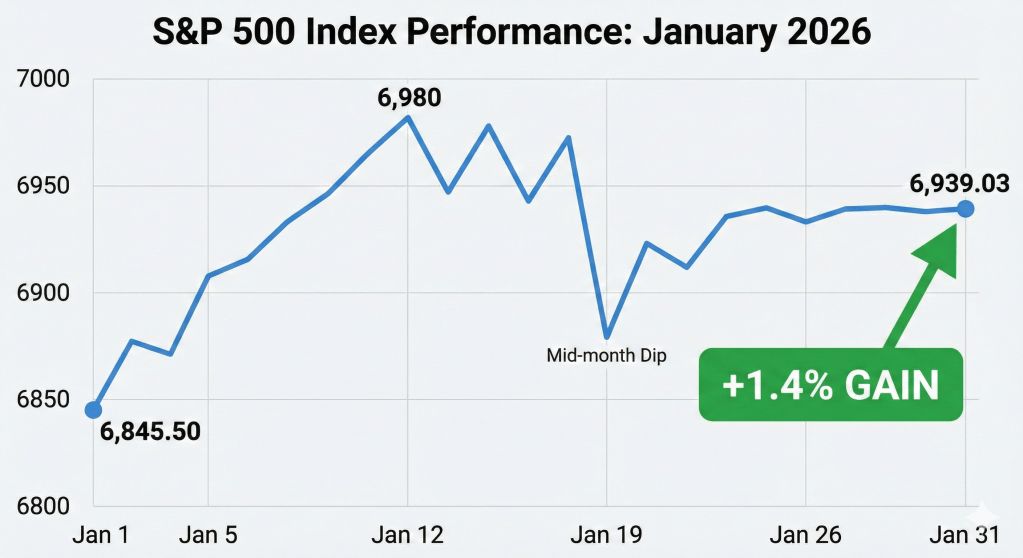
| Opening Value | 6,845.50 | $363.50 |
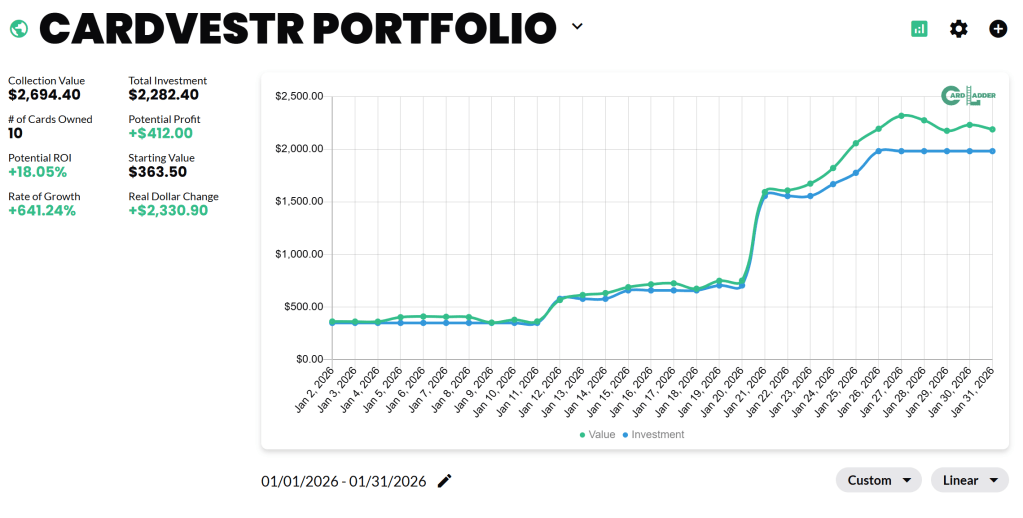
| Closing Value | 6,939.03 | $2,694.40 |
| Monthly Gain | +1.4% | +18.05% (Potential ROI) |
While the S&P 500 managed a respectable 1.4% gain, our concentrated Aristocrat strategy delivered a Potential ROI of +18.05%. This 1,600+ basis point outperformance highlights the power of target-rich acquisitions in a maturing collectibles market.
January’s “Aristocrat” Acquisitions
Our $2,000 monthly budget was deployed with surgical precision, focusing on liquidity and historical significance:
- 2003 Topps LeBron James #221 (BGS 9.5): Acquired for $850. LeBron’s market remains the gold standard for modern blue-chips. With the NBA trading card license transitioning to Fanatics, “Topps Era” LeBron rookies are becoming historical anchors for high-end portfolios.
- 1986 Topps Jerry Rice (PSA 8): A foundational GOAT asset. As the NFL market stabilizes in early 2026, Rice remains the undisputed “Aristocrat” of wide receivers.
- 1989 Upper Deck Ken Griffey Jr. (PSA 9): The “Kid” is the defining face of modern baseball collecting. This acquisition adds a high-liquidity asset with cross-generational appeal.
- Michael Jordan “Baby Aristocrat” Play: We added five Michael Jordan cards to the stack. MJ isn’t just a player; he is a sovereign economic entity in the hobby. Low-numbered or high-grade Jordan assets are the closest things to “physical gold” in sports investing.
- 1988 O-Pee-Chee Brett Hull Rookie: Acquired for $206. A value-play on a hockey legend, utilizing the “Aristocrat” framework to find entry points in under-indexed legends.
A Tale of Two Charts: Volatility vs. Value
When we compare the S&P 500 performance chart to our Cardvestr Portfolio chart, the difference in “investor experience” is striking.
- The Volatility Gap: The S&P 500 chart shows a “mid-month dip” around January 20th—a sharp drop triggered by geopolitical tensions regarding NATO and Greenland. In contrast, the Cardvestr chart shows a steady, staircase-like ascent as we deployed capital on Jan 12, Jan 21, and Jan 26.
- Momentum: The S&P 500 struggled to recover its mid-month highs, finishing well off its January 27th peak of 6,980. Our portfolio, however, ended the month at its absolute peak value of $2,694.40, driven by the “real dollar change” of +$2,330.90 as our new acquisitions were marked to market.
Bottom Line
January proved that while “the tide lifts all boats,” a high-conviction strategy focused on iconic Hall of Famers provides a significant “moat” against standard market volatility. We entered February with 10 cards owned and a Rate of Growth of +641.24%.
The S&P 500 may be predicting a positive 2026, but Cardvestr is already living it.






Leave a Reply