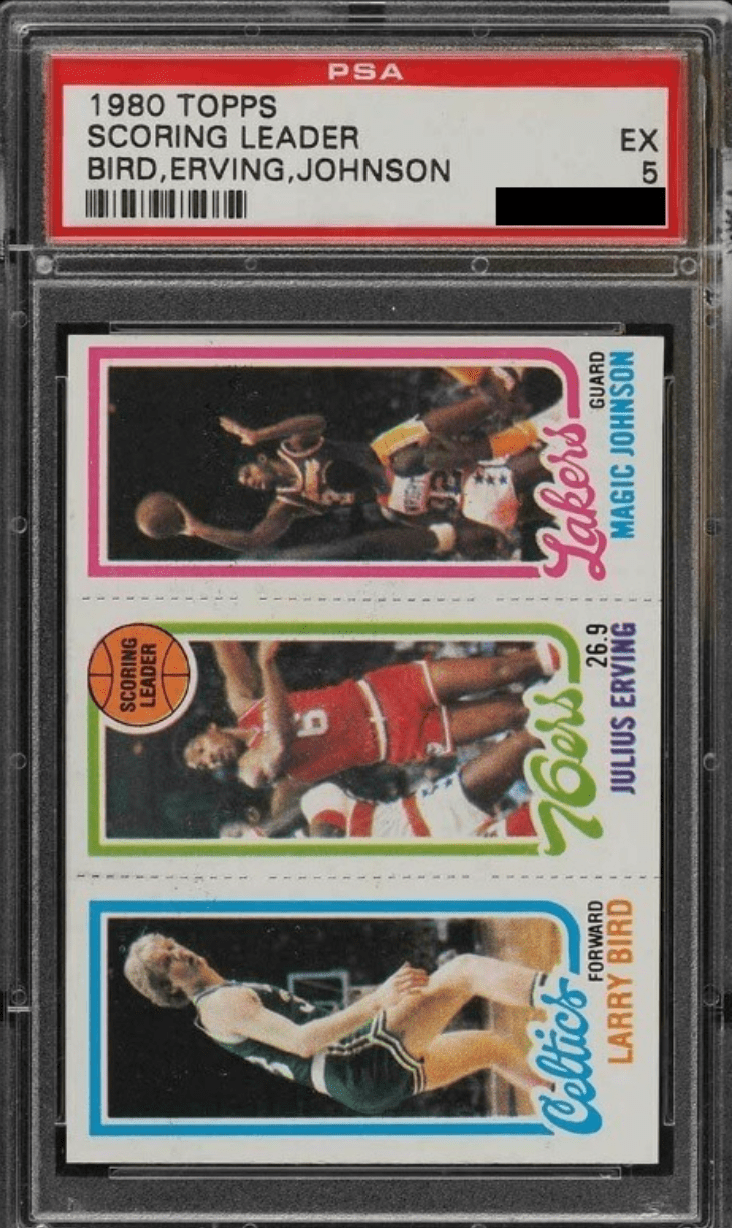
Acquisition: 1980 Topps Larry Bird / Julius Erving / Magic Johnson (PSA 5)
Purchase Price: $800
Strategy: Blue Chip Aristocrat
The Anatomy of the Deal
For our first acquisition of April, we are checking off one of the most significant “Powerhouse” cards in the history of the hobby. The 1980 Topps Bird/Magic/Erving rookie isn’t just a sports card; it’s a historical document that captures the exact moment the NBA transitioned from the Dr. J era into the legendary Bird/Magic rivalry that saved the league.
We secured a PSA 5 (EX) for $800, staying well under our $2,000 monthly cap while adding a cornerstone asset to the Cardvestr portfolio.
Why This Card?
The Cardvestr Blue Chip Aristocrat strategy is built on three pillars: Liquidity, Legacy, and Scarcity. 1. Triple-Threat Pedigree: This card features the rookie debuts of two Top-10 players of all time (Bird and Magic) alongside an established Hall of Famer (Julius Erving). It is the only “multi-GOAT” rookie card of its kind.
2. Historical Resilience: While modern prospects fluctuate with every box score, the 1980 Topps scoring leader card has shown decades of steady growth. It is immune to “hype cycles.”
3. Visual DNA: The perforated three-panel design is iconic. Even at lower grades, the eye appeal of this card is unmistakable.
The Grade Debate: Why PSA 5 vs. PSA 6?
In the Aristocrat strategy, we look for the “Value Sweet Spot”—the point where price and eye appeal intersect to offer the highest floor for future resale.
- The Price Gap: As of early 2026, a PSA 6 typically commands a premium, often trading between $1,400 and $1,600. By opting for the PSA 5 at $800, we effectively halved our cost while retaining 90% of the card’s visual “wow factor.”
- Condition Sensitivity: This set is notorious for print defects (black “snow”) and centering issues. A PSA 6 often looks marginally better but carries double the financial risk if the market softens.
- The “Aristocrat” Logic: At an $800 entry point, we have preserved $1,200 of our April budget. This allows us to remain nimble—potentially looking for a second acquisition this month or rolling that capital into a heavy-hitter for May. We aren’t just buying cards; we are managing a fund.
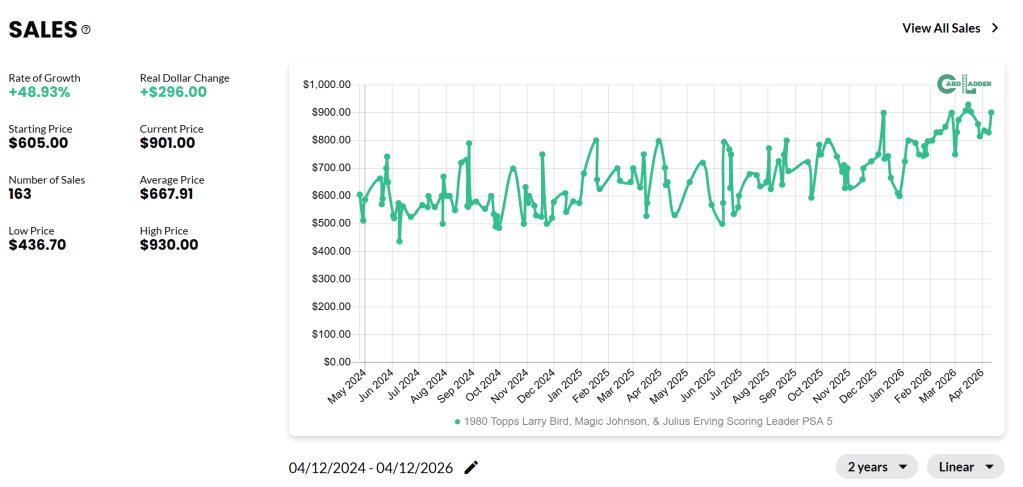
Portfolio Impact
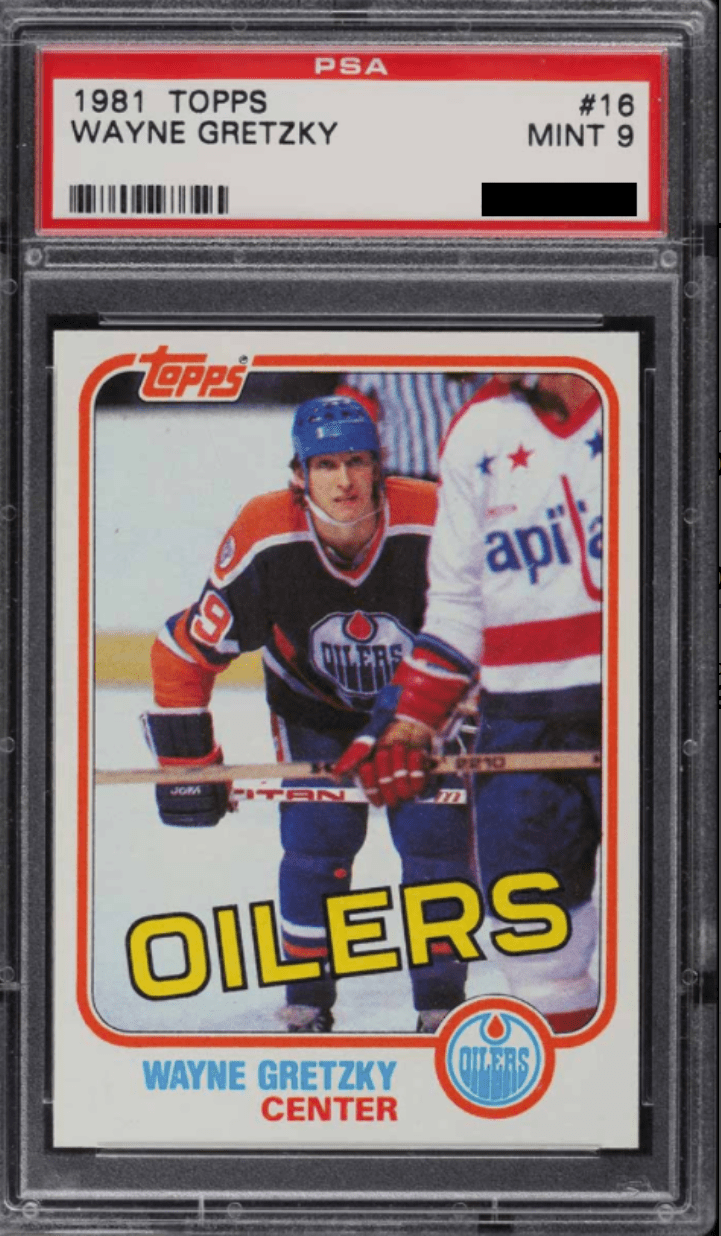
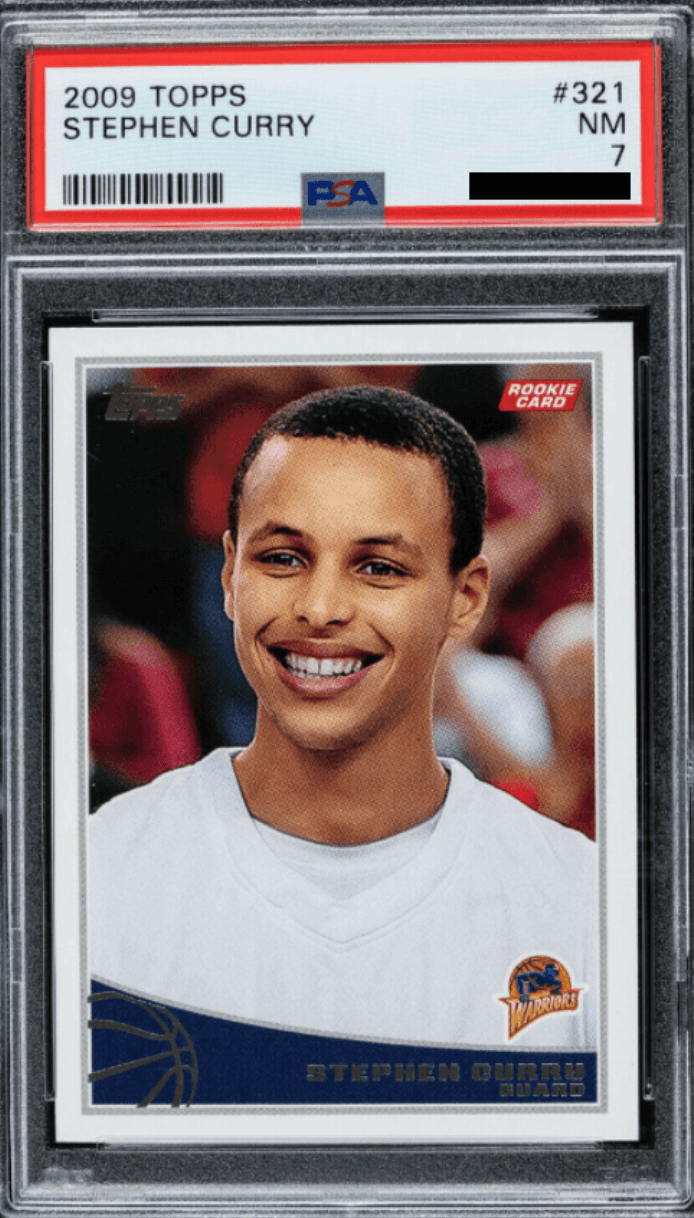
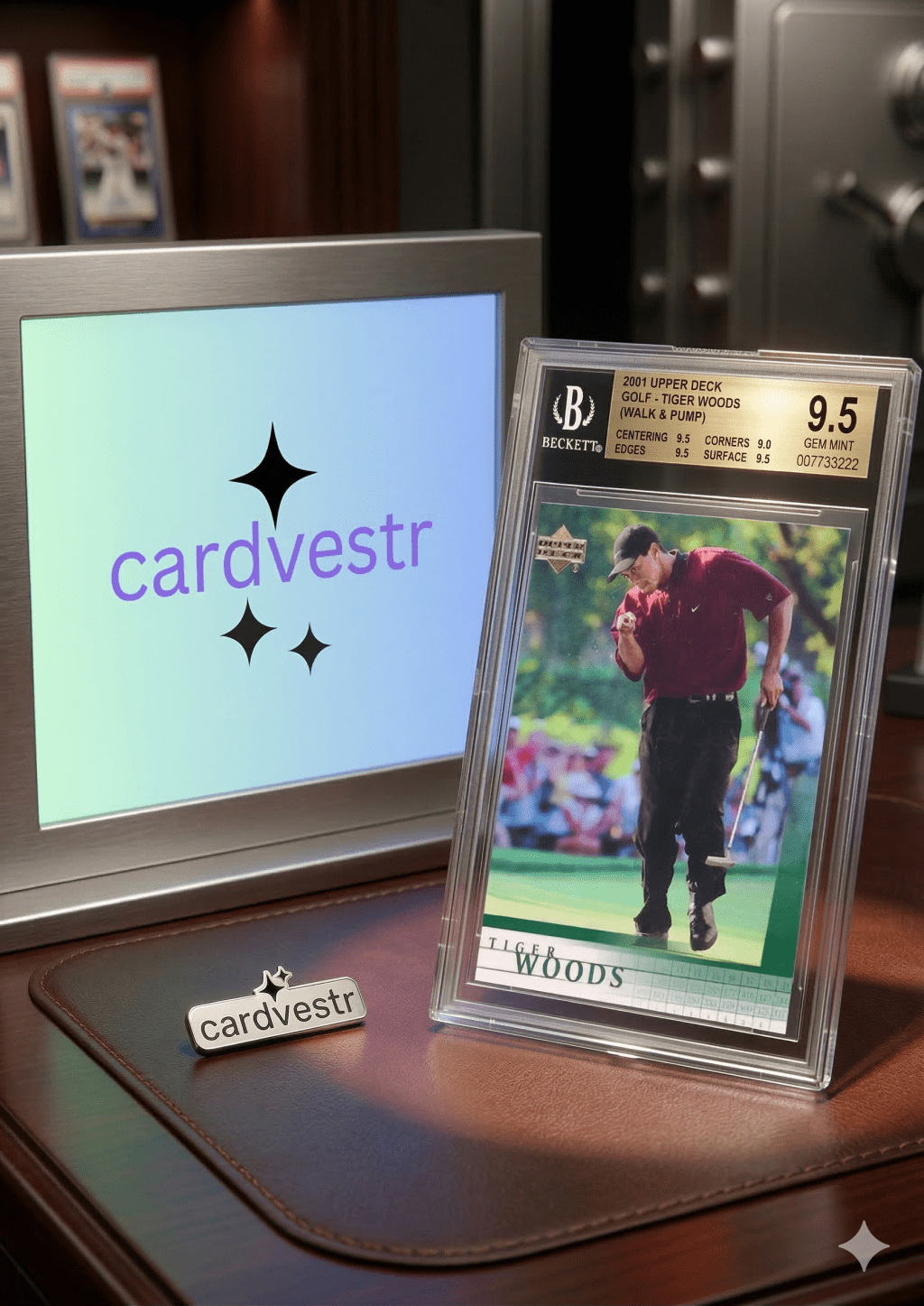
By adding the Bird/Magic rookie, the Cardvestr portfolio now balances our recent acquisitions like the Tiger Woods BGS 9.5 and the 2009 Stephen Curry PSA 7. We are building a diversified “All-Star Team” of investment-grade assets that span multiple eras and sports.
This PSA 5 fits perfectly into our “Buy and Hold” philosophy. It’s a “Blue Chip” that allows us to sleep at night, knowing we own a piece of basketball royalty at a disciplined entry price.

 CardVestr
Leave a comment