
Welcome back to the Cardvestr log. If you’ve been following our journey from the jump, you know that March is always a pivot point in the sports card calendar. The “Ides of March” might have been a warning for Caesar, but for us, it was a call to action. With our strict $2,000 monthly budget and a mission to build a “Blue Chip Aristocrat” portfolio, this month required surgical precision.
Here is the full breakdown of every card we acquired in March, the logic behind the buys, and why these “Aristocrats” are the safest harbor in a volatile market.
The March Acquisitions: A Breakdown of the “Blue Chip” Haul
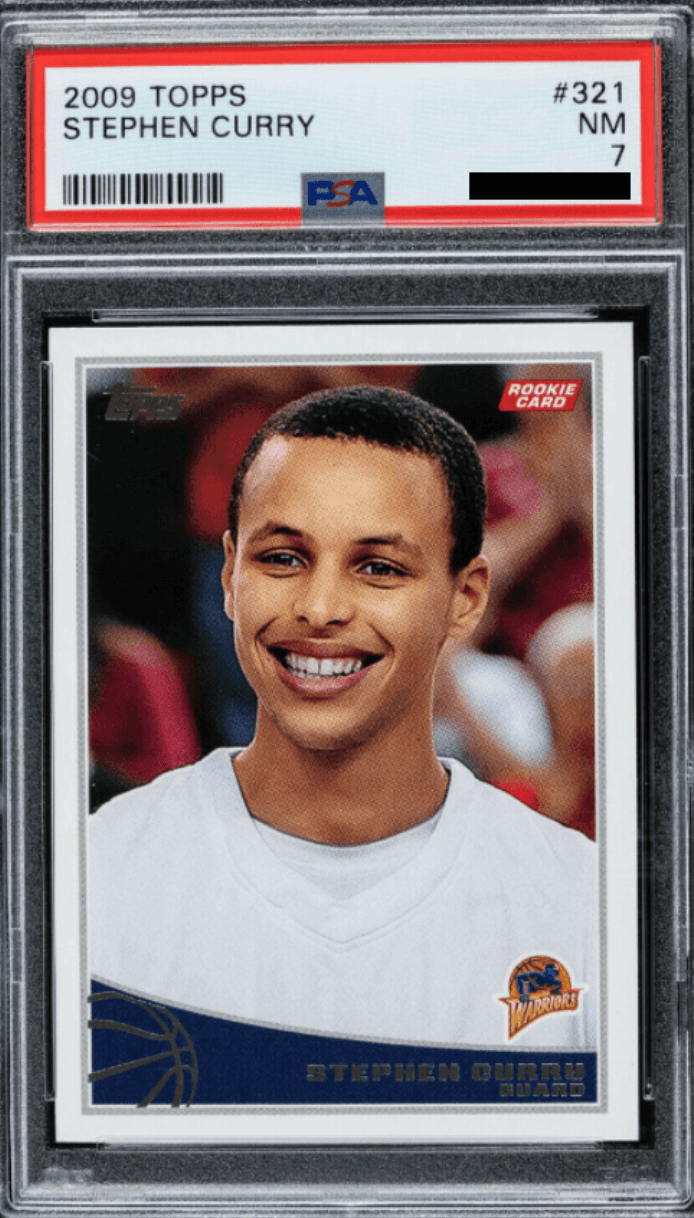
1. 2009 Topps Stephen Curry #321 (PSA 7)
Acquisition Price: $1,400
Category: Modern Legend / The Anchor
This was the heavy hitter of the month, eating up a significant portion of our $2,000 allocation. Why a PSA 7? In a market where everyone chases “Gem Mint or Bust,” the smart money often looks at the “eye appeal” of a lower-grade vintage or iconic modern card. The 2009 Topps Curry is arguably the most important basketball card of the 21st century.
Curry didn’t just change the Warriors; he changed the geometry of the game. When you’re building a portfolio of “Aristocrats,” you need the person who redefined the sport. We opted for the PSA 7 because the price point allowed us to own a piece of history that still presents beautifully without the “Grade Premium” of a PSA 9 or 10, which can be astronomical. This is a long-term hold—a “forever card” that serves as the cornerstone of our basketball wing.
2. 1981 Topps Joe Montana #190 (PSA 8)
Acquisition Price: $300
Category: Vintage Football / The GOAT Standard
You cannot talk about football greatness without Joe Cool. While the debate between Montana and certain modern quarterbacks rages on, Joe’s 1981 Topps Rookie remains the gold standard for vintage football investors.
We picked this up at The Philly Show after scouting three different booths. The centering on this PSA 8 is exceptional—often these cards are tilted or have a rough “O-Pee-Chee” style cut even in the Topps version. For $300, we secured a high-grade rookie of a 4-time Super Bowl champion. In a year where the hobby is seeing a massive “flight to quality,” Montana is the ultimate “buy and forget” asset.
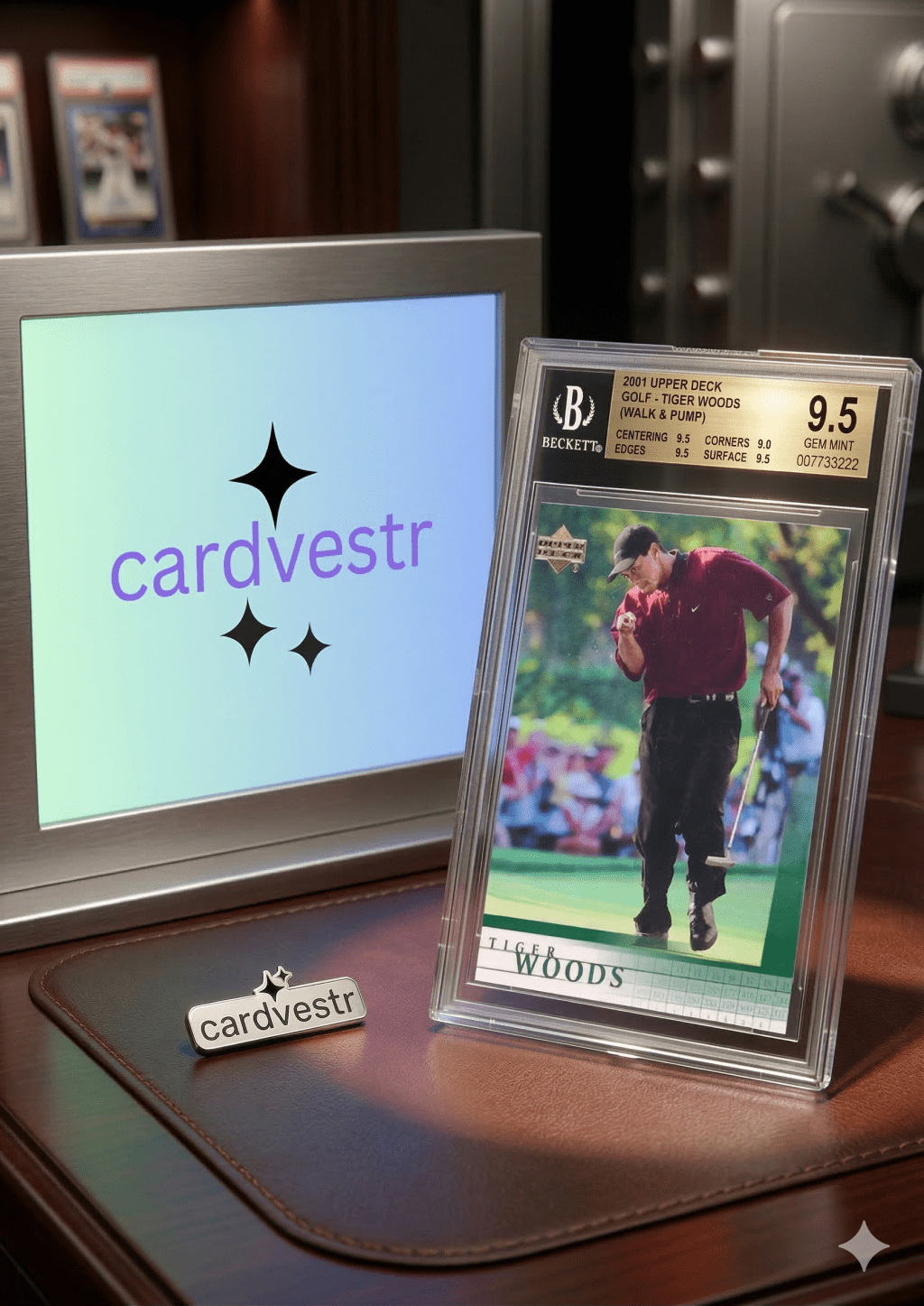
3. 2001 Upper Deck Tiger Woods #1 (BGS 9.5)
Acquisition Price: $100
Category: Multi-Sport / The Sunday Red
This 2001 Upper Deck Rookie is his most recognizable card.
We went with the BGS 9.5 (Gem Mint) here specifically because of our updated policy to include BGS grading alongside PSA. The “inner sleeve” of the BGS slab offers a level of protection for these paper-thin cards that I personally prefer for golf. At $100, this was an absolute steal for a Gem Mint card of the greatest to ever swing a club. It’s a low-risk, high-reward “Aristocrat” that adds diversity to the Cardvestr portfolio.
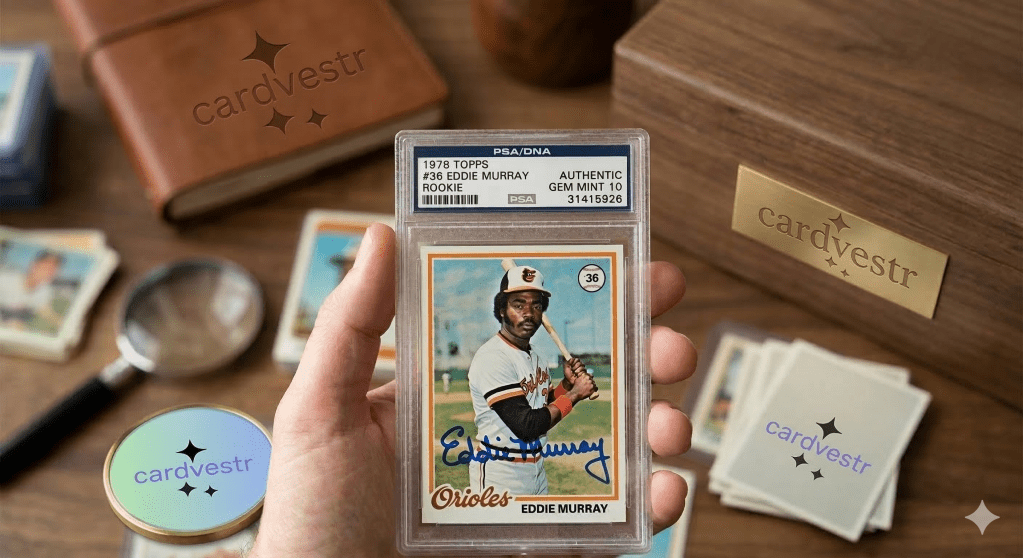
4. 1978 Topps Eddie Murray Rookie #36 (PSA 10 Auto / Authentic)
Acquisition Price: $175
Category: Vintage Baseball / The Signature Piece
This was a major “find of the show.” Eddie Murray is one of only a handful of players in the 500 HR / 3,000 Hit club. He is a first-ballot Hall of Famer and a legend of the game. Finding a clean 1978 Topps rookie is hard enough, but finding one with a PSA 10-grade signature? That’s the “Aristocrat” edge we look for.
The card itself has that classic late-70s aesthetic, and the autograph is bold and centered on the card’s lower half. Authenticated vintage autos are a growing niche in the hobby because they combine the scarcity of the base card with the personal touch of the legend’s hand.
5. The “Great” Addition: Wayne Gretzky
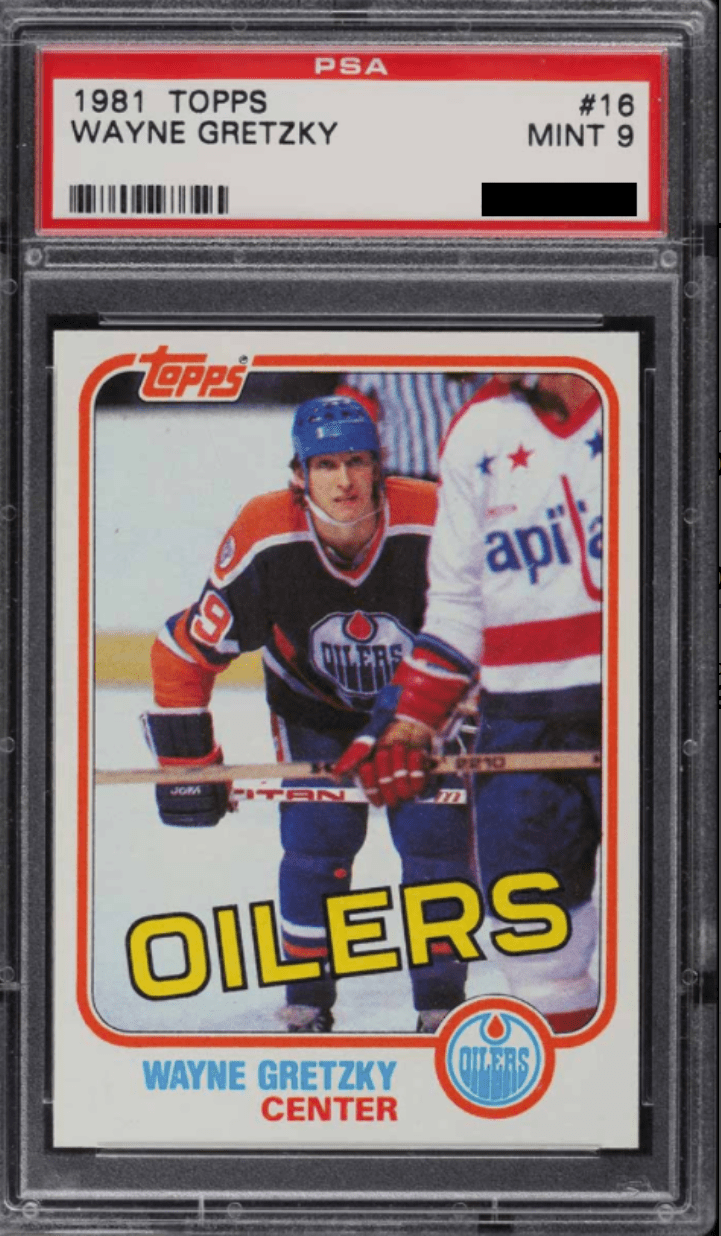
To round out the month, we finalized a deal for a hockey icon that belongs in any serious collection:
- 1981-82 Topps #16 Wayne Gretzky (PSA 9): You can’t have an Aristocrat portfolio without the Great One. This second-year card provides high-grade vintage appeal at a fraction of the rookie price. It’s a high-liquidity asset that offers safety in the hockey market, which can often be more volatile than baseball or basketball.
Why These Cards? The Cardvestr Philosophy
Our strategy this month was governed by three pillars: Liquidity, Legacy, and Leverage.
- Liquidity: If I needed to sell the Curry or the Montana tomorrow, there are thousands of buyers waiting. We avoid the “flavor of the week” players who might disappear after one injury.
- Legacy: Every player added this month is either in the Hall of Fame or is a lock to be there on the first ballot. We are investing in history, not just cardboard.
- Leverage: By utilizing our $2,000 budget to buy 4-5 high-quality cards rather than 100 “cheap” ones, we leverage the power of scarcity. It is much easier for one $1,400 card to appreciate by 20% than it is for fifty $20 cards to do the same.
The Philly Show was a great reminder of why we do this. Seeing the passion of collectors—some who have been at it since my father’s era (shoutout to that Don Mattingly rookie that started it all)—proves that the “Blue Chip” approach is the most sustainable way to play this game.
Looking Ahead: The April Roadmap
As we turn the page to April, the strategy at Cardvestr is shifting. We aren’t changing our “Aristocrat” DNA, but we are changing our “theater of operations.” While I won’t name specific players today (keep an eye on our social for those reveals), here is where our focus will be:
1. The “Green Jacket” Effect
April is the most important month in the world of golf. We will be looking to capitalize on the prestige and history of the season’s first major. Our focus will be on historical winners and those who have cemented their place in the lore of the game. We are looking for cards that capture the “prestige” of the sport—think limited edition inserts and high-grade vintage from the 60s and 70s.
2. The Hardwood Transition
With the professional basketball playoffs looming, the market for “proven winners” is going to heat up. Our focus in April will be on playoff performers. We aren’t looking for the regular-season MVP; we are looking for the players who have “Rings on the Table.” We want the guys who have proven they can carry a franchise when the lights are brightest.
3. Diamond Season Primetime
Baseball is back in full swing. April is often a time of “over-correction” in the MLB card market. People overreact to a slow start or a hot streak. We plan to stay level-headed. Our focus will be on “3,000-Hit Club” candidates and retired legends whose markets are currently quiet while everyone is distracted by the new rookies. April is the perfect time to buy the “boring” legends while the hobby is chasing the “shiny new toy.”
4. Gridiron Quietude
Football is in its “dead zone” before the draft. This is exactly when Cardvestr strikes. While everyone else is talking about college prospects, we will be looking at All-Time Great Quarterbacks whose card prices usually dip during the spring. If we can find another “Montana-level” deal in April, we’re taking it.
Stay Disciplined. Buy History. Long Live the Aristocrats.
Follow us for daily updates and a look at our April targets as they land in the vault!


 CardVestr
Leave a comment