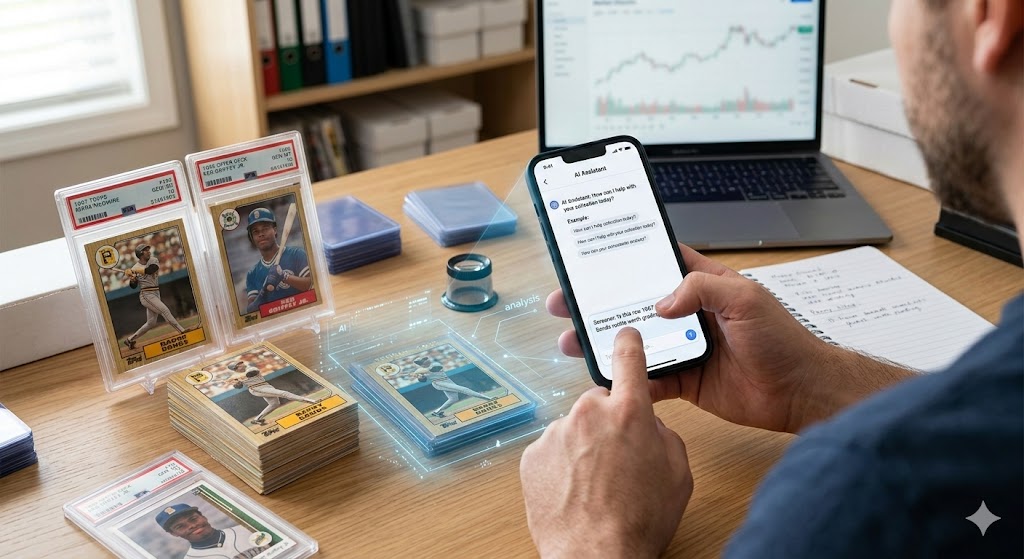
Integrating AI into your daily hobby routine can save you hours of research and help you stick to a disciplined, data-driven approach.
Here are seven highly effective AI prompts designed to streamline your market research, grading decisions, and content creation. You can copy and paste these directly, filling in the bracketed information as needed.
1. The “Blue Chip” Screener
This prompt helps filter out impulse buys and forces an objective evaluation of a potential acquisition to ensure it aligns with a strict, top-tier investment philosophy.
The Prompt:
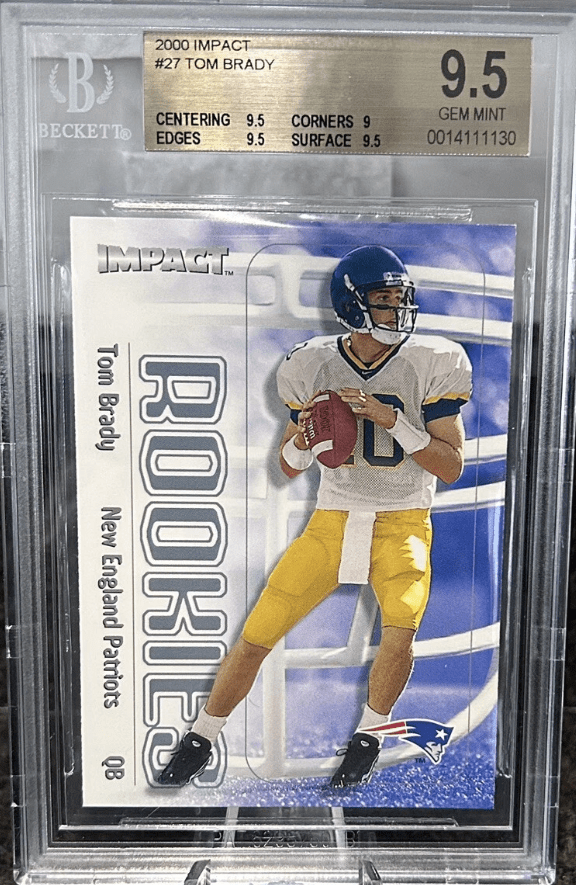
“Act as a meticulous sports card investment analyst. I am considering purchasing a [Insert Year/Brand/Player] in [PSA 10 / BGS 9.5]. Evaluate if this specific card meets the criteria of a ‘Blue Chip’ asset. Factor in the player’s Hall of Fame status, the historical significance of the set, and whether this is considered a definitive rookie card. Highlight any historical volatility with this specific asset.”
2. The Pop Report & Gem Rate Analyzer
Population reports can be dense. This prompt turns raw numbers into actionable intelligence regarding true scarcity.
The Prompt:
“Analyze the scarcity of the [Insert Year/Brand/Player]. The total PSA graded population is [Insert Total PSA], with [Insert PSA 10 Pop] PSA 10s. The total BGS graded population is [Insert Total BGS], with [Insert BGS 9.5 Pop] BGS 9.5s. Calculate the overall gem rate across both grading companies and tell me if this card is considered highly condition-sensitive compared to other iconic rookies from the same era. What specific condition issues usually plague this card?”
3. The Influencer Sentiment Tracker
The market is often moved by the narratives driven by major hobby voices. This prompt is great for synthesizing what the biggest names are saying before making a move or writing a market update.
The Prompt:
“Search the web for recent sports card market takes from influencers like Geoff Wilson, CardCollector2, KingoftheKards, and CardboardProfit regarding [Insert Player or Market Sector, e.g., ‘vintage Star Wars’ or ’90s basketball’]. Summarize the general consensus. Are they currently bullish, bearish, or holding on this specific sector, and what are their primary arguments?”
4. The Grading ROI Calculator
Before deciding to submit raw cards to a grading company, this prompt helps establish your break-even point and risk profile.
The Prompt:
“I am considering submitting a raw [Insert Year/Brand/Player] for grading. The current raw value is roughly $[Insert Raw Value]. The grading fee and shipping will cost $[Insert Grading Cost]. The current market value for a PSA 9 or BGS 9 is $[Insert Grade 9 Value], and a PSA 10 or BGS 9.5 is $[Insert Gem Value]. Calculate my break-even point, my potential ROI if it gems, and my total loss if it comes back an 8. Based on these margins, is this a smart grading risk?”
5. Market Pulse & Opportunity Scan
The hobby is momentum-driven. Prices lag performance. This prompt keeps you ahead of the wave instead of chasing it.
The Prompt:
“Act as a sports card market analyst. Based on current performance trends, media buzz, injury reports, team standings, and hobby sentiment, identify 5 players across MLB, NFL, NBA, and NHL whose card values are likely mispriced in the short-to-mid term. Explain why and suggest specific rookie or flagship cards to target.”
6. Portfolio Allocation Review
Most collectors are massively overweight one player or sport without realizing it. This keeps you diversified and strategic — like a real asset manager.
The Prompt:
“Review my sports card portfolio as if it were an equity portfolio. Allocate percentages by sport, player tier (prospect, prime star, legend), and risk level. Identify overexposure and recommend rebalancing strategies.”
7. Liquidity & Exit Planning
It’s not what a card is “worth.” It’s what you can actually net. Liquidity separates collectors from investors.
The Prompt:
“If I needed to liquidate this card within 30 days, what is the most efficient strategy? Compare eBay auction, fixed price with offers, consignment, trade, or card show sale. Estimate net proceeds after fees.”


 CardVestr
Leave a comment